
Managing Exam Stress: Practical Advice for School-Age Students
Feeling nervous before exams is normal. A little stress can even sharpen focus. But for some students the pressure builds until it affects sleep, mood and the ability to learn. If you are a student, this guide offers practical, supportive ways to manage exam stress. If you are a parent, it also explains how to help without adding to the pressure.
What exam stress can look like
- Worrying a lot about revision, results or letting people down
- Trouble sleeping, headaches or stomach aches
- Feeling irritable, tearful or low
- Avoiding revision, or doing far too much of it
- Finding it hard to concentrate or remember things
These signs are common around exams. They matter more if they last, get worse or start to affect daily life.
Practical ways to manage exam stress
Break it down
A mountain of revision feels overwhelming. Write down what you need to cover, split it into small tasks and put them into a realistic plan. Ticking off a small task is satisfying and builds confidence. Our guide to a realistic revision timetable shows how.
Revise in a way that works
Active methods such as quizzing yourself, doing practice questions and explaining a topic out loud usually feel harder than re-reading, but they work better and show you what you do know. Seeing evidence of what you can do is a powerful antidote to worry.
Look after the basics
- Sleep. Most teenagers need around eight to ten hours. A rested brain learns and recalls better than a tired one.
- Food and water. Regular meals and drinking enough help concentration.
- Movement. A walk, a run or a game of football can clear your head.
- Breaks and fun. Time with friends, hobbies and doing nothing is part of preparing well.
Calm your body
When you feel anxious, slow your breathing: breathe in gently through your nose for about four seconds and out for about six. Repeat for a minute or two. Relaxing your shoulders and unclenching your jaw can help too.
Keep perspective
Exams matter, but they are not the whole of who you are or what you can do, and there are usually several routes to where you want to go. Try not to compare yourself with others, and remember that feeling nervous often means you care.
Talk to someone
Telling a parent, friend, teacher or tutor how you feel often makes it easier. They can help you find practical solutions, and you may find that others feel the same.
On the day
- Pack your bag the night before, and check your equipment and the time and place of the exam.
- Eat something and drink some water.
- Read each question carefully, begin with something you can do and keep an eye on the time.
- If your mind goes blank, pause, breathe and move on to a question you can answer. You can return later.
- After the exam, avoid going through every answer. Concentrate on the next one.
For parents: how to help
- Listen first. Ask how things are going, and accept what your child says without rushing to fix it.
- Keep routines steady, with regular meals, sleep and some downtime.
- Praise effort and progress, not just results, and avoid comparing with siblings or friends.
- Keep your own expectations realistic, and make it clear that your love does not depend on grades.
- Offer practical help, such as a quiet space, snacks and a say in planning, without hovering.
YoungMinds has a helpful guide for parents on exam time and a guide for young people on exam stress.
When to ask for more help
If worries are constant, if low mood, panic or sleep problems continue, or if your child is avoiding school or exams, speak to the school’s pastoral team or your GP. Support is available for young people at any time:
- Childline offers free, confidential support on 0800 1111 or at childline.org.uk.
- YoungMinds Crisis Messenger: text YM to 85258 for free, 24/7 support.
- If you or someone you know is in immediate danger, call 999.
Key takeaways
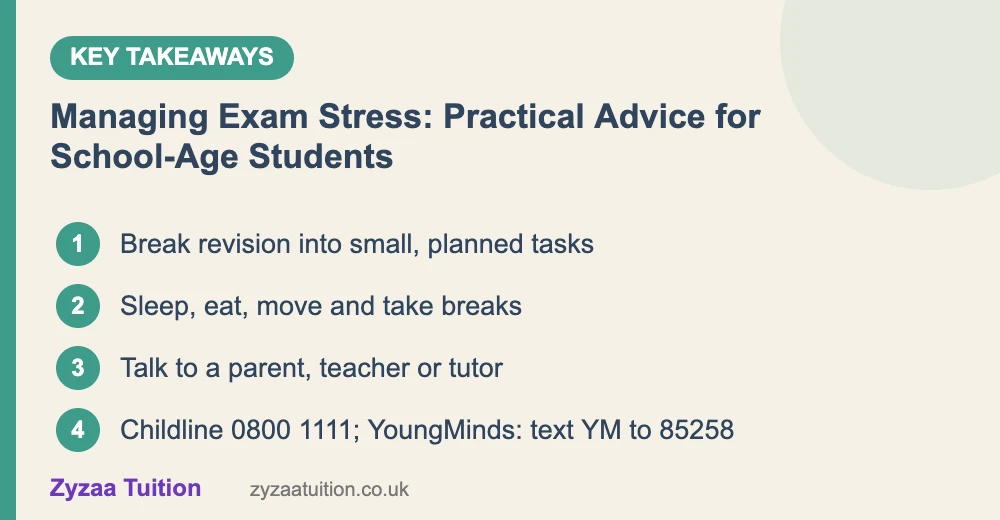
Exam stress is common, and steady routines, active revision, sleep and talking to someone can all help.
Common questions
Is it normal to feel stressed before exams?
Yes. Feeling nervous is very common and can help you focus. It becomes a concern if it lasts, gets worse or stops you from doing everyday things.
Can tuition make stress worse?
It depends on how it is run. Good tuition should build confidence by breaking work into manageable steps and giving clear feedback. If tuition adds pressure or your child dreads it, talk to the tutor and adjust the approach.
How can I tell if my child is just tired or really struggling?
Look at how long it has lasted and how much it affects daily life. A few tired days around a mock exam is normal. Weeks of low mood, withdrawal, sleep problems or avoiding school is a reason to talk to your child and the school.
Worried about confidence going into exams? Book a free assessment and we will help your child feel more prepared.
